
National Institute for Theoretical and Computational Sciences awards laptops at Eskom Expo ISF
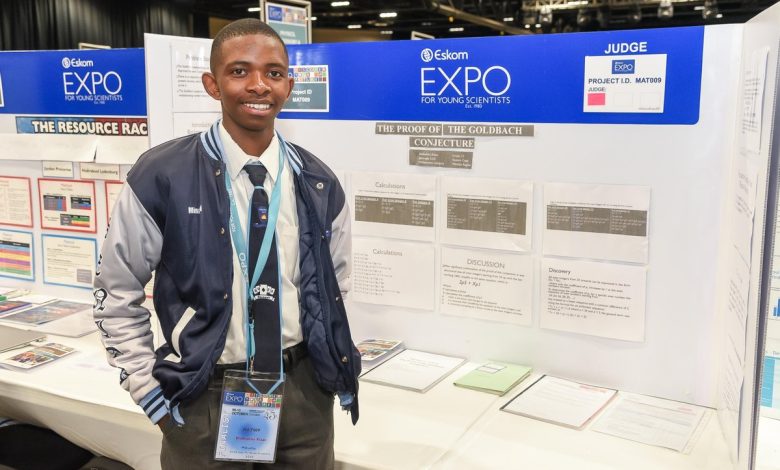
The Department of Basic Education is pleased to share the exciting news about the winners of the National Institute for Theoretical and Computational Sciences (NIThECS) Awards presented at the 45th Eskom Expo International Science Fair (ISF). Two bright young minds, Leony Moyisile and Endinakho Klaas, have each been recognised for their outstanding achievements in physics and mathematics, respectively, and received high-end laptops as their prizes. This recognition highlights the importance of fostering young talent in science and technology across South Africa.
Key details of the awards
- Event: The 45th Eskom Expo International Science Fair (ISF).
- Awards presented by: The National Institute for Theoretical and Computational Sciences (NIThECS).
- Prizes: Each winner received a high-end laptop.
- Winners and their regions:
- Leony Moyisile from the Kimberley Region for Physics.
- Endinakho Klaas from the Mthatha Region for Mathematics.
- Organisations involved: Eskom Expo for Young Scientists, the National Institute for Theoretical and Computational Sciences (NIThECS), and the Department of Basic Education (DBE).
Celebrating young talent in science and mathematics
We at the Department of Basic Education extend our heartfelt congratulations to Leony Moyisile and Endinakho Klaas, the deserving winners of the prestigious National Institute for Theoretical and Computational Sciences (NIThECS) Awards. Their success at the 45th Eskom Expo International Science Fair (ISF) is a testament to their hard work, dedication, and brilliant minds in the fields of physics and mathematics.
The Eskom Expo for Young Scientists is a critical platform in South Africa that encourages school learners to engage with science, technology, engineering, and mathematics (STEM) subjects. It provides an invaluable opportunity for young people to showcase their innovative projects, develop their research skills, and gain exposure to the scientific community. The Department of Basic Education actively supports such initiatives, as they are fundamental to nurturing the next generation of scientists, engineers, and innovators who will drive our nation’s progress.
The NIThECS Awards, with the generous provision of high-end laptops as prizes, serve as a significant motivator for learners. These awards not only recognise academic excellence but also equip students with essential tools to further their studies and exploration in computational and theoretical sciences. Such practical support can make a real difference in a student’s educational journey, opening doors to advanced learning and research opportunities.
We are incredibly proud of Leony from the Kimberley Region, who excelled in Physics, and Endinakho from the Mthatha Region, whose achievements in Mathematics stood out. Their success stories inspire countless other students across the country to pursue their passions in STEM fields. We believe that by investing in our youth through programmes like the Eskom Expo and awards from institutions like NIThECS, we are building a stronger, more innovative future for South Africa. For more information on our efforts to support education, please visit our official website at www.education.gov.za. You can also explore more departmental news and activities at SchoolClick.
Questions and answers for the public
Here are some common questions you might have about these awards and how you or your children can get involved:
- What is the Eskom Expo for Young Scientists?
The Eskom Expo for Young Scientists is South Africa’s primary science fair, where young scientists (learners from Grade R to Grade 12) showcase their research and innovation projects. It aims to encourage interest and participation in science, technology, engineering, and mathematics (STEM) subjects. - Who are the National Institute for Theoretical and Computational Sciences (NIThECS)?
NIThECS is an institute that supports and promotes theoretical and computational sciences in South Africa. They play a vital role in developing expertise and research capacity in these advanced scientific fields. - How does the Department of Basic Education (DBE) support initiatives like the Eskom Expo?
The DBE supports such initiatives by promoting participation in schools, encouraging STEM education, providing resources, and collaborating with partners like Eskom and NIThECS to create opportunities for learners to excel in science and mathematics. - What kind of projects do learners present at the Eskom Expo?
Learners present a wide range of projects, from scientific investigations and experiments to innovative inventions and technological solutions, covering various scientific disciplines like physics, mathematics, biology, chemistry, and engineering. - How can my child participate in the Eskom Expo?
Learners interested in participating should speak to their science teacher or school principal. Registration typically happens early in the year, and information is available on the Eskom Expo for Young Scientists’ official website. - Are there regional expos before the national event?
Yes, the Eskom Expo operates at regional levels across the country. Winners from these regional expos then get the opportunity to compete at the International Science Fair (ISF), which is the national event. - What are the benefits of participating in the Eskom Expo?
Participants gain valuable research skills, develop critical thinking, build confidence, network with scientists and peers, and can win awards, scholarships, and even opportunities to represent South Africa internationally. - Are the NIThECS Awards only for physics and mathematics?
While the recent winners highlighted were in physics and mathematics, NIThECS’s focus is on theoretical and computational sciences broadly. Specific award categories can vary, and it’s best to check the Eskom Expo or NIThECS websites for detailed criteria each year. - What kind of laptops did the winners receive?
The winners received high-end laptops, which are powerful computing devices suitable for advanced studies and computational work, greatly assisting them in their scientific and academic pursuits.