Thrive by Five Index reveals developmental challenges for South African children
The 2024 Thrive by Five Index, South Africa’s most comprehensive survey of preschool child development, reveals that less than half of children are developmentally on track when starting school. The study, which assessed 5,000 four-year-olds across 1,388 Early Learning Programmes (ELPs), highlights disparities based on gender, socioeconomic status, and enrolment in early learning programmes. It calls for targeted investments in early learning, workforce development, health integration, and family support to ensure all children, especially the most vulnerable, are ready to learn.
Key details from the thrive by five index
- Place: South Africa
- Person: Ms Sonja Giese, Executive Director of DataDrive2030
- Study Scope: 5,000 four-year-old children
- Programmes Assessed: 1,388 Early Learning Programmes (ELPs)
- Focus Area: Developmental outcomes of preschool children
Detailed findings of the thrive by five index
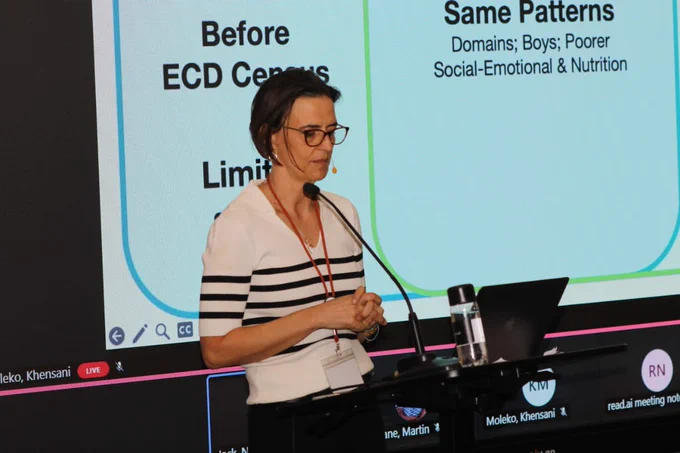
Ms Sonja Giese from DataDrive2030 presented the main findings of the 2024 Thrive by Five Index, a large study looking at how well preschool children in South Africa are developing. The study looked at 5,000 four-year-old children in 1,388 different Early Learning Programmes (ELPs). It also included a smaller study of children from poorer areas who weren’t in these programmes, giving important information about the problems faced by the most at-risk children.
The findings showed that less than half of the children are developing as they should. Only 42% of children in ELPs are on track, while 28% are falling behind, and 30% are falling far behind. Girls are doing better than boys, with 48% of girls on track compared to only 37% of boys. The poorest children face the biggest challenges; children in low-fee ELPs are half as likely to be on track compared to those in higher-fee programmes.
Not being enrolled in an ELP makes things even worse. Only 18% of children not in ELPs are on track, and 55% are falling far behind. The study also found that a child’s personal abilities, like how well they focus on tasks and manage their emotions, can help them do better even if they come from a poor background.
To improve these outcomes, the study suggests several priority actions. These include making sure ELPs get money on time and regularly, and removing financial obstacles for the most vulnerable children. It also suggests improving pay, working conditions, and training for early learning teachers, and providing ongoing support to organisations that help improve the quality of these programmes. Additionally, ELPs need good learning materials, and principals should be supported to be leaders in teaching methods. It’s also important to combine early learning with health and nutrition services and find ways to reduce stunting.
Finally, the study recommends encouraging parents to get involved and support learning at home, and increasing access to books to help children learn to read early on.
Ms Giese’s presentation made it clear that many children are starting school without the basic skills they need to succeed. Investing in early learning programmes, training teachers, integrating health services, and supporting families is vital to make sure that all children, especially those most at risk, are ready to learn and reach their full potential. For more information about the Department’s activities, visit the Department of Education website. You can also find further updates on departmental activities at schoolclick.co.za.
Questions and answers about the thrive by five index
- What is the Thrive by Five Index?
It’s South Africa’s largest survey that checks how well preschool children are developing. - Who was involved in presenting the findings?
Ms Sonja Giese, who is the Executive Director of DataDrive2030, presented the main points. - How many children were assessed in the study?
The study looked at 5,000 four-year-old children. - What is an ELP?
It stands for Early Learning Programme, which is a type of preschool or early education centre. - What were the main findings of the study?
Less than half of the children are developing on track, and there are big differences based on gender and income. - Are girls and boys developing at the same rate?
No, girls are generally doing better than boys in terms of being developmentally on track. - What can be done to help children who are falling behind?
The study suggests investing in early learning programmes, improving teacher training, and supporting families. - Why is early learning so important?
It helps children develop the basic skills they need to succeed when they start school. - How does poverty affect a child’s development?
Children from poorer backgrounds are less likely to be on track compared to those from wealthier families.